How to Start Shopify Dropshipping in Pakistan: A Complete Guide
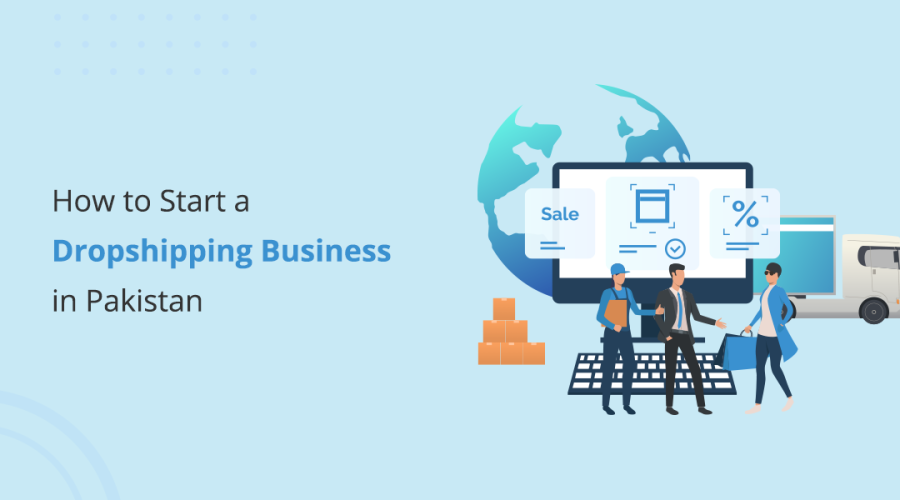
Shopify dropshipping from Pakistan is real, it works, and thousands of Pakistani entrepreneurs are already doing it. The model lets you sell products to customers anywhere in the world without ever touching the inventory yourself. Your supplier ships directly to the customer, and you keep the margin between your price and theirs.
Starting Shopify dropshipping in Pakistan does have specific challenges that beginners rarely hear about upfront: Shopify Payments isn’t available here, PayPal can’t receive money into Pakistani accounts, and getting your payment infrastructure right is genuinely the trickiest part of the setup. This guide covers all of it honestly, step by step.
Pakistan’s e-commerce market reached $7.7 billion in 2024 and is projected to grow to $12 billion by 2027, creating a real opportunity for aspiring entrepreneurs. For Shopify dropshipping in Pakistan, you can start with as little as $100 to $200 covering your Shopify subscription and initial marketing costs, with no need to stock inventory.
Read More: How to Start Freelancing in Pakistan
What Shopify Dropshipping Actually Looks Like
You build a Shopify store, list products from suppliers, and set your own prices. When a customer orders from your store, you place that order with your supplier (through an app that automates this), and they ship the product directly to your customer. You never see the product; you just handle the marketing and customer communication.
The appeal of dropshipping in Pakistan lies in its minimal upfront investment. You don’t need to rent a warehouse, keep inventory, or manage big logistics. This means students, freelancers, and part-time sellers can start with far less risk.
The model works best when you target international customers (US, UK, Canada, Australia) because you earn in dollars or pounds while your costs remain in rupees. Local dropshipping to Pakistani customers is a separate and different setup with different payment tools and suppliers.
Read More: Best Freelancing Websites in Pakistan
Step 1: Choose Your Niche and Target Market
This is where most beginners move too fast. They set up the store first and figure out the niche later. That’s backwards.
Your niche determines your supplier, your ads, your store design, and your customers. Changing it after you’ve launched means rebuilding most of what you’ve done.
Shopify’s own data shows that profitable niches in 2025 include car accessories, sustainability products, home décor, baby products, and phone accessories, reflecting strong consumer demand.
When picking a niche, the practical test is this: can you find a supplier for it on AliExpress or CJdropshipping with at least 4-star reviews and 500 or more orders? Are your top competitors running ads on Facebook and TikTok (which means the category is profitable, not saturated)? Can you advertise it with a short, engaging video?
Trending product categories for Shopify dropshipping in 2025 include niche fashion and micro-trends driven by TikTok, home office organizers, and eco-friendly kitchen gadgets. These trend-driven items can go viral quickly when marketed on social platforms.
Avoid overly broad niches like “general merchandise.” A store that sells everything builds trust with nobody. “Home gym accessories for women” converts better than “fitness equipment.”
Read More: How to Start Amazon Business from Pakistan
Step 2: Set Up Your Shopify Store
Shopify offers a free three-day trial, followed by a paid plan. The Basic plan costs $39 per month when billed monthly, or $29 per month with annual billing. For most beginners, the Basic plan is the right starting point.
For a new dropshipping store, the Basic plan includes unlimited products, two staff accounts, basic analytics, discount codes, abandoned cart recovery, and all core e-commerce features needed to launch. The key limitation is that using a third-party payment processor adds a 2% transaction fee on top of the processor’s own charges.
Go to shopify.com, start the free trial, and work through the setup in this order:
- Pick a store name that’s short, memorable, and related to your niche.
- Choose a theme. Shopify’s free themes (Dawn, Sense, Refresh) are clean and fast-loading. You don’t need a premium theme at the start.
- Add your logo and basic branding. Canva works fine for this.
- Set up your navigation: a product collection page, an About Us page, and a Contact page are the minimum.
- Connect your domain. A custom domain costs PKR 3,000 to 5,000 per year and makes your store look professional.
- Install your dropshipping supplier app (covered in the next step).
- Add your first 10 to 20 products.
- Set up your payment gateway (covered separately below because this is where Pakistan-specific issues live).
A practical note: don’t spend two weeks perfecting your store design before you know what sells. Get it functional and decent-looking, launch, and improve as you learn what your customers respond to.
Read More: How to Become a Freelancer Without Experience
Step 3: Connect Your Dropshipping Supplier
The supplier app connects your Shopify store to product catalogues. When a customer orders, the app automatically places the order with your supplier and sends you tracking information.
The three main options for Pakistani Shopify dropshippers are:
DSers (for AliExpress): DSers is the official AliExpress dropshipping app for Shopify and the most reliable option for Shopify users in Pakistan. It automates order fulfillment, product sourcing, and inventory syncing. DSers has a free plan available up to a certain order volume, making it the lowest barrier entry point.
The limitation is shipping time. AliExpress products ship from China and typically take 15 to 30 days to reach US and UK customers. That’s acceptable if you’re upfront about it, but it creates customer service pressure.
CJdropshipping: CJdropshipping has warehouses in multiple countries including the US and Europe, giving you faster shipping options compared to standard AliExpress delivery. CJ also offers private labelling and custom packaging, which matters when you want to build a brand rather than just arbitrage products. Many Pakistani dropshippers use DSers for early testing and switch to CJdropshipping when they scale a winning product.
Spocket: Sources products from US and EU suppliers, meaning 3 to 7 day shipping for US and European customers. Products cost more than AliExpress but the customer experience is significantly better, which reduces refund requests. Spocket’s plans start at $39.99/month for a basic paid tier after a free trial.
When researching suppliers, delivery speed is a key customer satisfaction factor. Try to work with suppliers that store items near your common customer locations for fast order fulfillment. When managing multiple suppliers, use automation rules to route orders to the nearest supplier with items in stock.
Read More: 8 Best Skills to Learn Online in Pakistan
Step 4: The Payment Gateway Problem (And How to Solve It)
This is the section most Pakistani Shopify guides either skip or gloss over. Here’s the honest picture.
Shopify Payments is not available in Pakistan. Merchants must use third-party payment providers.
Stripe does not officially support Pakistan-registered businesses. Pakistani businesses cannot open a Stripe account directly. PayPal can send payments but cannot receive into a Pakistani bank account, making it not viable as an e-commerce checkout for Pakistan-registered businesses.
So what actually works?
For International Customers (US, UK, Europe)
2Checkout (now Verifone): This is the most widely used solution for Pakistani Shopify stores targeting international customers. It accepts credit cards from buyers worldwide, integrates directly with Shopify, and pays out through Payoneer to your local bank account. 2Checkout offers full integration with Payoneer accounts, enabling Pakistani merchants to withdraw payments from Shopify to their Payoneer balance, then transfer to a local bank.
Payoneer Checkout: Payoneer Checkout integrates directly with Shopify, supports multi-currency payments, and offers a secure way to accept payments from global customers. Payoneer charges no setup fee for individual sellers and dropshipping suppliers, with a small transfer cost for withdrawals.
Read More: How to Monetize YouTube Channel in Pakistan
For Pakistani Customers (Local Dropshipping)
You can use local payment gateways like Easypaisa, JazzCash, or HBL Payment Gateway, which are trusted and widely used across Pakistan. These options are great for local customers who prefer mobile payments or bank transfers.
UnumPay is a Shopify-approved app enabling Pakistani bank integrations including Alfalah, JazzCash, Easypaisa, UBL, HBL, and Meezan, making it one of the more practical solutions for stores serving both local and international customers.
The practical advice: if you’re targeting international customers, set up 2Checkout with Payoneer from day one. If you’re targeting Pakistan, JazzCash and Easypaisa cover the majority of your customers.
Important note on transaction fees: since you can’t use Shopify Payments in Pakistan, Shopify charges an additional 2% transaction fee (on Basic plan) on every sale processed through a third-party gateway, on top of whatever the gateway itself charges. Factor this into your product pricing from the start.
Read More: How to Monetize Facebook Page in Pakistan
Step 5: Product Research the Right Way
Random product picking is why most dropshipping stores fail. Systematic product research is why some succeed.
Use a combination of TikTok ads library, Meta Ads library, AliExpress “Hot Products” sections, and Shopify’s trending product lists to identify what’s selling. For testing products, start with a small budget of $50 to $100 on a single product to validate interest before scaling ad spend.
When evaluating a product, look for:
Proof of demand: Search for the product on TikTok and Instagram. Are there videos with 500,000 or more views showing the product in use? That’s organic validation that people find it interesting. If competitors are running paid ads for it on Facebook for 30 days or more, the product is likely profitable.
Reasonable shipping time: For international customers, anything over 30 days is a significant risk for chargebacks. Look for products with ePacket shipping or AliExpress Premium Shipping options under 15 days.
Price point: Products in the $20 to $60 retail range tend to work well. Below that, ad costs eat your margin. Above $80 to $100, customers need more trust and social proof before buying.
Repeat potential: Products customers reorder, or that belong to a category they’d buy again from the same store, are more valuable than one-time purchases.
Tools worth knowing: AliExpress’s own sales data, CJdropshipping’s trending products list, and Google Trends (filter to the US or UK market rather than Pakistan for international stores) are free. Paid tools like AutoDS and Sell The Trend automate a lot of this research.
Read More: How to Earn from TikTok in Pakistan
Step 6: Marketing Your Store
A Shopify store with no traffic earns nothing. Marketing is where most of your ongoing time and money will go.
Facebook and Instagram Ads: Still the primary channel for Shopify dropshipping. You can run ads in Pakistan targeting US and international audiences without any restriction. Start with $5 to $10 per day per product test, run for three to five days, and kill anything that doesn’t generate add-to-cart actions. Scale what converts.
TikTok Ads: TikTok is the fastest channel for viral product demos and social-first creatives. Meta (Facebook/Instagram) remains valuable for retargeting and scaling winning products. Experienced dropshippers use both together.
Organic TikTok: Free and high-reach if your product demonstrates well on video. Pakistani dropshippers have built substantial stores purely through organic TikTok content, especially for visually satisfying or problem-solving products.
SEO and blogging: Slower to build but creates long-term traffic that doesn’t require ongoing ad spend. Add product descriptions written for search intent, and publish blog posts answering questions your customers ask on Google.
Honest Cost Breakdown for Pakistani Shopify Dropshippers
| Expense | Cost |
| Shopify Basic plan | $39/month (or $29/month billed annually) |
| Custom domain | $14 to $20/year |
| DSers dropshipping app | Free (basic plan) |
| 2Checkout transaction fee | 3.5% plus $0.35 per transaction |
| Shopify third-party gateway fee | 2% per transaction (Basic plan) |
| Facebook/TikTok ads (testing) | $100 to $300 per product test |
| Test product orders (optional) | $30 to $100 |
| Total to launch and test | $250 to $600 |
Third-party app costs average $50 to $100 per month once you add tools for email marketing, reviews, and SEO. A premium Shopify theme costs $140 to $350 as a one-time expense, though this is entirely optional at the start.
The real cost of dropshipping is advertising, not setup. Expect to spend $300 to $500 testing two to three products before finding one that works. Budget for this from the beginning rather than running out of money after one failed product test.
Read More: How to Earn from YouTube in Pakistan
Pakistan-Specific Advantages Worth Knowing
Pakistani dropshippers have a few genuine advantages that don’t get mentioned often enough.
Labour cost for store operations: Hiring a Pakistani freelancer to manage customer service, write product descriptions, or run ad campaigns costs a fraction of what US-based entrepreneurs pay. This gives you a significant operational cost advantage when scaling.
Time zone coverage: Pakistan Standard Time (PKT, UTC+5) means you can cover customer service during US evening hours (which is Pakistan morning), filling a gap that many solo US dropshippers can’t manage.
Local Sialkot suppliers: Pakistani sellers have successfully sold surgical instruments, sporting goods including cricket bats, leather goods, and textiles on international platforms. If you can source from local manufacturers in Sialkot or Faisalabad and dropship internationally through DHL or TCS Express, you have a product sourcing advantage on certain niche categories that competitors in other countries don’t have.
Common Mistakes Pakistani Shopify Dropshippers Make
Skipping the payment gateway setup: Some beginners launch their store without a functional checkout for international buyers. Test your checkout with a real order before running any ads.
Choosing too many products: A store with 500 products and no focus doesn’t convert. Start with 5 to 15 tightly related products in one niche.
Giving up after one failed product: Most dropshipping mentors won’t tell you this publicly, but winning products are found through testing and elimination. The average successful dropshipper tests four to eight products before finding a consistent winner.
Ignoring customer service: Slow shipping combined with poor communication creates chargebacks, which can get your payment account suspended. Set up automated shipping confirmation emails and reply to customer queries within 24 hours.
Not registering with FBR: Register with FBR through the IRIS portal to obtain a National Tax Number (NTN), necessary for tax compliance and banking. Operating without an NTN becomes a problem when your Payoneer or bank asks for tax documentation as earnings grow.
Read More: How to Earn Dollars Online in Pakistan
Frequently Asked Questions
Is Shopify dropshipping legal in Pakistan?
Yes, completely legal. You’re running an e-commerce business, sourcing from international suppliers, and selling to international or local customers. Register with FBR and get an NTN once your income crosses PKR 50,000 per year.
Can I use Stripe for my Shopify store from Pakistan?
Not directly. Stripe doesn’t support Pakistan-registered businesses officially. Some sellers access Stripe through a US or UK company structure, but this requires proper legal and tax setup. For most beginners, 2Checkout plus Payoneer is the practical alternative.
How long does it take to make the first sale?
With paid advertising, some stores make their first sale within a few days of launching. Without ads (relying on organic social media), it typically takes two to eight weeks. Speed depends heavily on your product choice and marketing execution.
Do I need to register a company to start Shopify dropshipping in Pakistan?
Not immediately. Many beginners operate as individuals with just a CNIC and NTN. Register with SECP via their e-portal, paying a fee of about PKR 1,800 to get a Certificate of Incorporation if you decide to formalise later. The company registration adds credibility for business banking and payment gateway applications.
What’s the best niche for Pakistani beginners on Shopify?
There’s no universal answer, but home décor, pet accessories, and phone accessories tend to have strong demand, good supplier availability, and reasonable shipping options. Pick based on your ability to create engaging content for that niche rather than purely on profit margin.
The biggest barrier to starting Shopify dropshipping from Pakistan isn’t the payment gateway or the supplier setup. It’s the willingness to test products seriously, learn from the first failures, and stay consistent long enough for the model to work. The infrastructure exists. The global market is accessible. The question is whether you’ll give it the time it actually takes.
Read More: How to Make Money Without Investment