
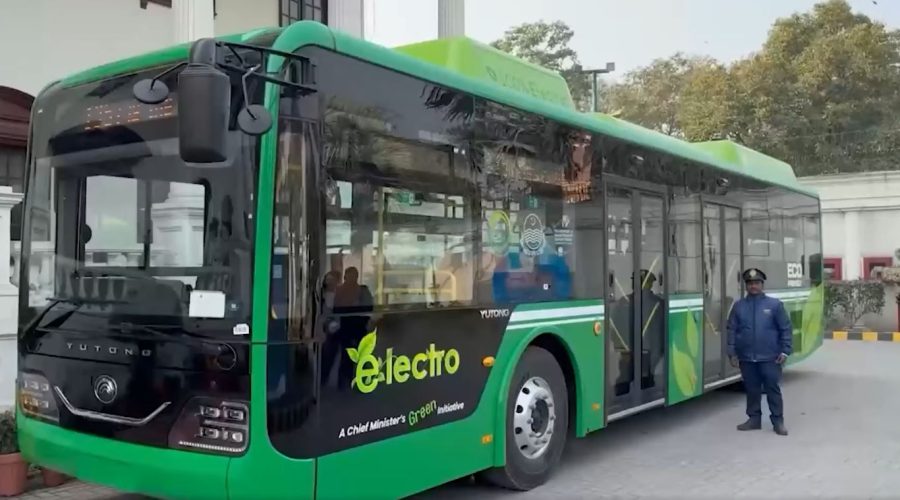
Green Electric Bus Lahore: Stations List, Routes, Timing
Punjab Green Electric bus service has started operating in Lahore, which is commonly known as Green Bus, under the “Electro” transport system. The goal is simple. Connect outer areas with the city center, reduce pollution, and offer low cost travel. Around 27 buses operate on nearly 98 stations across the main route.
Overview of Lahore Electric Bus Network
The current electric bus system follows one main corridor with expansion routes added later.
Core route:
Lahore Railway Station to Green Town
New expansion routes:
• Raiwind to Thokar Niaz Baig
• Thokar Niaz Baig to Harbanspura
The system connects business districts, hospitals, universities, and residential zones.
Read: Electric bus routes in Rawalpindi
Main Green Electric Bus Route, Railway Station to Green Town
This is the primary and most active green electric bus route.
Starting Point: Lahore Railway Station
Ending Point: Green Town
Complete Stations List on Main Route
Here is a structured station flow so you can understand the route easily.
Central City Stops
• Haji Camp
• Police Lines
• Shimla Pahari
• Club Chowk
• Muslim League House
• Governor House
• Bagh e Jinnah
• Lahore Zoo
Read More: Speedo Bus Routes in Lahore
These stops serve government offices and public spaces.
| Mall Road Corridor Stops • Charing Cross • Ganga Ram Hospital • Waris Road • Abid Market This section has high traffic. Offices, markets, and hospitals are located here. | Mazang to Ichhra Section • Mazang • Shama • Ichhra • Ichhra Bridge • Rehmanpura • Faisal Town • New Garden Town This part connects dense residential areas with commercial zones. |
| Education and Canal Road Stops • Campus Bridge • Punjab University Gate No 4 • Hailey College • IBA Stop Students use this route heavily for daily commutes. | Ravi Road and Township Section • Shahdara Khui • Ravi Chowk • Shaukat Chowk • Akbar Chowk • Township Bazaar • Mochi Pura This section links industrial and housing areas. |
Final Stops Towards Green Town
• Model Road
• Link Road
• Honda Mor
• Government Employees Society
• Pindi Stop
• Riphah University
• Nursery Stop
• Hamdard Chowk
• Minhaj University
• Green Town
These stops serve southern Lahore and major housing societies.
Route Map Structure Explained
The electric bus route follows a straight corridor model.
Flow pattern:
Railway Station → Mall Road → Canal Road → Township → Green Town
This design reduces confusion. If you understand the main corridor, you can easily track your stop.
Additional Electric Bus Routes in Lahore
The system is expanding with new routes.
Route 2: Raiwind to Thokar Niaz Baig
• Covers southern outskirts
• Connects housing societies to main terminals
Route 3: Thokar Niaz Baig to Harbanspura
• Covers western to eastern Lahore
• Connects major highways and residential areas
Read More: Lahore Metro Bus Routes
Alternate Operational Corridor
Another electric bus corridor operates on:
R A Bazaar to Chungi Amar Sidhu
This route follows Ferozepur Road, one of Lahore’s busiest transport lines.
Ticket price and Timings
• Ticket price around PKR 20 per ride
• Free travel for students, women, elderly and special passengers
• Daily ridership around 17,000 people
Service timing:
• Start around 6 AM
• Last buses late evening
• Peak rush during office hours
Read: Karachi Peoples Bus Service Routes and Timings
Key Benefits of Lahore Electric Buses
• Zero emission transport
• Lower travel cost
• Modern facilities like Wi Fi and charging ports
• Better connectivity between the city and outskirts
Electric Bus Helpline number Lahore
There are two helpline numbers available to get in contact with Green Bus authorities, and these numbers are (042) 111-222-627 and 1762
Tips for Using Electric Bus in Lahore
• Board from main stops like Charing Cross or Ichhra
• Avoid peak hours if possible
• Use interchange points like Thokar Niaz Baig
• Confirm direction before boarding
Aliyan Bashir
June 13, 2026 at 10:02 pmJi Bohat Ache Roots hain is se logon ko bohat faida hua hai aur web ne bi bohat ache tareqe se btaia hai
Sadia Saeed
July 11, 2026 at 5:16 pmI am a daily commuter who relies on Electro bus for my office travel. Currently, the waiting time between two buses is 30 to 45 minutes, which is causing me to get late for work in the morning and late reaching home in the evening.
Jutt
August 23, 2026 at 9:52 am953
Fatima Arif
September 3, 2026 at 11:07 amis there is any green bus from shahdara to UET?
irfan
September 16, 2026 at 2:46 pmthokar say kanal muslim town ko se bus number ati hay