Complete Karachi Flyovers and Underpasses Guide: 2026 Map
Driving through Karachi used to mean budgeting an extra hour just to clear a single bottleneck at Board Office or Star Gate. With over twenty million people sharing a sprawling grid, the city’s transport infrastructure has to work double time. Over the last two decades, the local and provincial governments shifted focus toward elevated and subterranean engineering to bypass gridlock.
Knowing the exact positions of these concrete structures saves your sanity, your time, and your fuel. Whether you are daily commuting from Gulshan to Clifton, moving commercial freight from the port, or trying to catch a flight at Jinnah International Airport, this complete Karachi flyovers and underpasses guide breaks down the major signal-free corridors keeping the city in motion.
The Birth of the Signal-Free Corridor
Karachi’s obsession with flyovers gained massive momentum following the success of the early Nazimabad flyover. Urban planners realized that standard traffic lights could no longer cope with the explosive volume of vehicles. This realization led to the development of “Signal-Free Corridors” managed by the Karachi Metropolitan Corporation (KMC) and the Sindh government.
The idea is simple: lift traffic or push it underground so mainline drivers do not have to stop for cross-street intersections. While these projects sometimes face criticism from urban planning purists who favor public transport over private cars, they remain the absolute backbone of everyday vehicular movement in the city.
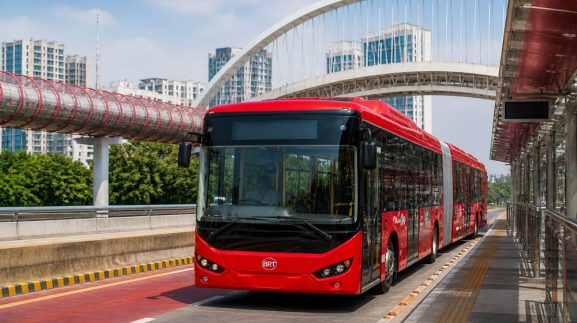
Read: Red Line Bus Karachi BRT Routes and Timings
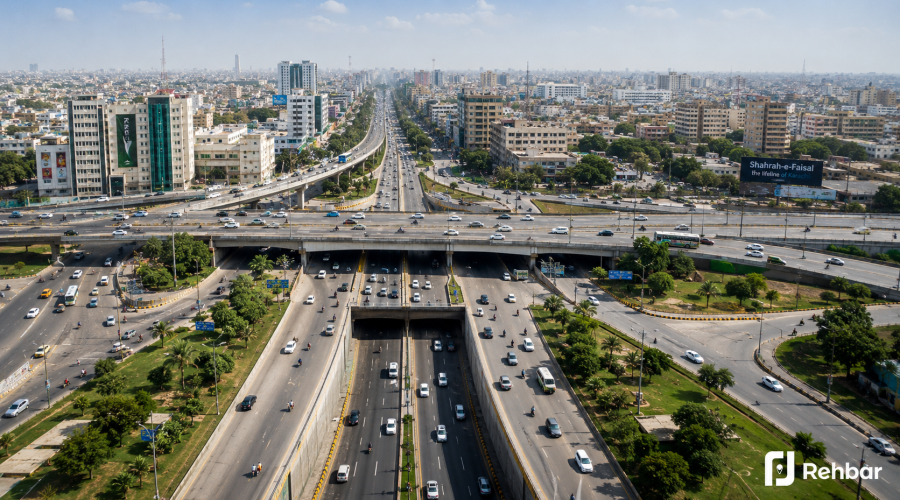
Shahrah-e-Faisal: The City’s Lifeline
Shahrah-e-Faisal serves as the primary artery connecting the financial hubs of Downtown Karachi, Clifton, and Saddar to the residential neighborhoods of the east and the airport. It features an extensive collection of bridges, flyovers, and underpasses that ensure you rarely have to tap your brakes.
- Hotel Metropole to FTC Flyover: The journey begins smoothly with the FTC Flyover, which allows mainline traffic to sail over the busy intersection near the Finance and Trade Centre.
- Nursery Flyover: Positioned right in the middle of a dense commercial market, this structure lets commuters pass the traditionally choked retail zone without stopping.
- Baloch Colony Flyover: A critical junction that links Shahrah-e-Faisal with the industrial zones of Korangi and the residential sectors of modern housing societies.
- Karsaz Flyover & City School PAF Chapter Flyover: These structures manage the flow around military bases and prominent educational centers, ensuring student traffic does not stall the main highway.
- Natha Khan Flyover & Drigh Road Underpass: Drigh Road represents one of the smartest engineering combos on the strip. The underpass handles the subterranean flow toward the airport while the overhead structures sort out the turning loops.
- Star Gate & Airport Flyover: The final major elevated structures that drop travelers directly into the Jinnah International Airport terminal loops or push them forward toward Malir.
Signal-Free Corridor I: Shadhara to Sher Shah Suri Road
Moving toward the northern and central districts, the Sher Shah Suri Road corridor links the dense residential zones of North Nazimabad and New Karachi with the old city center. This route is heavily integrated with mass transit systems.
- Board Office Flyover (Edhi Flyover): Situated near the Matric Board Office, this structure clears the massive congestion point where North Nazimabad meets Nazimabad.
- KDA Flyover: Clears the intersection at the KDA Chowrangi commercial zone.
- Five Star Flyover: A massive structural asset that carries thousands of vehicles daily over one of North Nazimabad’s busiest retail roundabouts.
- Sakhi Hassan Flyover: Smooths out the journey past the historic Sakhi Hassan graveyard area toward the northern edge of the city.
- Nagan Chowrangi Flyover: A giant, multi-directional loop structure that handles the complex merging traffic from New Karachi, North Karachi, and Surjani Town.
Read: Green Line Bus Karachi Routes and Stops List
The Central Grid: Rashid Minhas Road and University Road
For anyone traveling between District East and District Central, the intersection of Rashid Minhas Road and University Road forms the daily commute grid. This zone is undergoing massive transformation due to active Bus Rapid Transit (BRT) construction.
Rashid Minhas Road Flyover Chain
- Sohrab Goth Flyover & Underpass: The grand northern gateway where the Lyari Expressway and the M-9 Motorway meet the city street grid. It uses both an underground pass and an elevated bridge to sort out long-distance freight trucks from local cars.
- Water Pump & Ayesha Manzil Flyovers: These structures lift traffic cleanly over the busy shopping districts of Federal B Area.
- Gulshan Flyover: Spans the main intersection near Gulshan Chowrangi, providing an unhindered link down toward the National Stadium.
- Millennium Flyover & Johar Mor Flyover: Essential bridges that handle the heavy rush hour traffic generated by the massive population expansion in Gulistan-e-Jauhar.
University Road and the BRT Red Line Interventions
According to recent site inspections by Sindh Chief Minister Murad Ali Shah, the BRT Red Line project is actively altering the structure of University Road. The project design calls for a specialized mix of three flyovers, five underpasses, and seven elevated U-turns dedicated to public transit integration.
- Jail Chowrangi Flyover: A massive architectural feature that untangles traffic near the Central Jail, connecting University Road to Shaheed-e-Millat Road.
- Hassan Square Flyover: Lifts vehicles over the perennially busy Expo Centre junction.
- NIPA Flyover: A vital multi-tier intersection where the circular railway tracks, Rashid Minhas Road, and University Road all cross paths.
- Mosamiyat Flyover & Munawar Chowrangi Underpass: The Sindh government set strict deadlines to expedite construction here. Work on the Mosamiyat Flyover has resumed with full funding to ease traffic near the university belt, while the new Munawar Chowrangi Underpass is being pushed forward to facilitate smooth transit from Kamran Chowrangi deep into Gulistan-e-Jauhar.
Read: Complete List of Karachi Postal Codes with Area Names
The Clifton and KPT Subterranean Network
Clifton and the Karachi Port Trust (KPT) areas present a completely different style of engineering. Instead of massive concrete flyovers blocking the sea views, planners here leaned heavily on modern underpasses to move traffic.
| Structure Name | Type | Location / Primary Connection |
| KPT Underpass | Underpass | Clifton, near Schon Circle, linking Gizri to the beachside |
| Submarine Underpass | Underpass | Punjab Chowrangi, clearing the path toward Sunset Boulevard |
| Mehran Underpass | Underpass | Near the Gulf Shopping Mall belt, managing local commercial traffic |
| Jinnah Bridge Flyover | Flyover | Keamari Port area, carrying heavy industrial freight trucks |
| ICI Flyover | Flyover | Connects the old city area of West Wharf directly to Mauripur Road |
The underground design in Clifton successfully preserves the visual aesthetic of the upscale residential blocks while handling thousands of vehicles moving to and from the corporate offices on Khayaban-e-Iqbal.
Mega Expressways and Emerging 2026 Corridors
The engineering footprint of Karachi is expanding far beyond simple intersection bridges. Mega-scale expressway projects are actively redrawing the transit times between peripheral housing societies and the city center.
The Lyari Expressway
This 38-kilometer controlled-access toll road runs along both banks of the Lyari River. It serves as an elevated bypass over some of the most congested urban land on earth. By jumping onto the expressway at Mauripur Road or Sohrab Goth, you can glide completely across the city in fifteen minutes, skipping dozens of choked traditional intersections below.
Read: Karachi Peoples Bus Service Routes and Timings
The Malir Expressway Project
The Malir Expressway is the largest active infrastructure development in the city. Running along the Malir River bank, this highway is designed as a high-speed, signal-free corridor connecting Korangi Creek near DHA Phase 8 directly to the M-9 Super Highway near DHA City Karachi.
Structural work on the bridges and elevated river-adjacent flyovers is progressing steadily. The project utilizes electronic toll collection and smart traffic monitoring systems to prevent the slow-downs common on older civic roads. Once fully complete, this route will allow residents from the far northern developments to reach Clifton and Sea View in under twenty-five minutes, driving real estate values upward along the entire Malir corridor.
Navigating Structural Hazards During Monsoon Season
While flyovers and underpasses look fantastic on paper, Karachi’s notorious monsoon seasons present specific practical challenges that every driver must understand.
Monsoon Safety Warning: Underpasses like the Submarine Underpass and the Drigh Road Underpass are highly prone to sudden waterlogging during heavy downpours. Drainage pumps can fail under extreme rainfall volumes, turning subterranean tracks into dangerous pools within minutes.
When heavy rains hit the city, it is always a safer practice to stay on elevated flyovers or stick to surface-level roads where water accumulation is easier to spot. Keep a steady speed and avoid entering any underpass if you notice standing water accumulating at the entrance slopes.