
How to Control Diabetes Naturally: 10 Proven Methods
Health Disclaimer: This article is written for informational purposes only and does not replace professional medical advice. If you have diabetes or prediabetes, always consult a qualified doctor before making changes to your diet, exercise routine, or supplement use.
Pakistan has a diabetes problem, and it’s getting worse. According to the International Diabetes Federation, Pakistan has the highest prevalence of diabetes among adults aged 20 to 79 in the world. A 2024 systematic review and meta-analysis estimated approximately 24 million Pakistanis are living with type 2 diabetes, with another 26 million in the pre-diabetic range, totalling around 50 million people affected. That’s not a health crisis lurking on the horizon. It’s already here.
The rest of the world isn’t far behind. The global prevalence of diabetes among adults aged 20 to 79 was estimated at 589 million cases in 2024, representing about 1 in 9 adults worldwide.
Medication is often necessary, and nobody’s saying otherwise. But the research is clear: lifestyle changes can dramatically reduce blood sugar, delay complications, and in some cases push type 2 diabetes into remission. Exercising regularly, managing stress, and eating more foods high in fiber and probiotics may help lower blood sugar levels — though these lifestyle adjustments do not replace medical treatment for diabetes or other metabolic conditions.
Here’s what actually works, backed by current evidence.
Read More: How to Lose Weight Naturally
1. Rethink What You Eat, Starting With Fiber
Diet is where blood sugar management begins or falls apart.
The most consistent finding across decades of research is that fiber slows everything down, the breakdown of carbohydrates, the absorption of glucose, and the resulting spike in blood sugar. High-fiber diets help manage both type 1 and type 2 diabetes by helping the body regulate blood sugar. Fruits, vegetables, legumes, and whole grains are your best sources.
If you’re eating white rice or white bread at most meals (as many South Asians do), you don’t have to cut them out entirely. Start by reducing portion sizes and pairing them with fiber-rich vegetables, lentils, or legumes. This combination slows the glucose release from the starchy food significantly.
The glycemic index (GI) is worth understanding here. Foods with a high GI raise blood sugar rapidly; low-GI foods do so gradually. Swapping white bread for whole-grain bread, or regular potatoes for sweet potatoes, can make a real difference to your post-meal blood sugar readings.
Incorporating fat into meals and snacks can also help slow the rise of blood sugar because the body takes time to digest fat. A little olive oil, avocado, or nuts alongside a starchy meal isn’t just tasty, it’s actually useful for blood sugar control.
2. Move More, Any Kind of Movement Counts
You don’t need a gym membership. You need consistency.
Exercise works on blood sugar through two mechanisms: it makes your muscle cells more sensitive to insulin (so they absorb glucose more efficiently), and it burns glucose directly as fuel during activity. When you work out regularly, especially with strength training, your muscles use glucose for repair and growth, leading to lower blood sugar levels.
A short walk after meals is one of the most underrated tools in blood sugar management. Research cited by Frontiers in Endocrinology supports the idea of post-meal walking specifically, because that’s when blood sugar peaks. Even 10 to 15 minutes after eating can blunt the glucose spike significantly.
Strength training, bodyweight squats, resistance bands, or lifting weights deserve special mention because building muscle tissue creates more sites where glucose can be stored and used. You don’t need to train like an athlete. Two or three sessions a week of moderate resistance work, combined with daily walking, is a realistic and effective target for most people.
Read More: Is Detox Water a Myth or Does It Really Work?
3. Manage Stress, It Directly Raises Blood Sugar
Most people know stress is bad for them generally. Fewer realize it has a direct, measurable impact on blood glucose.
The hormones released under stress cause blood glucose levels to increase. Cortisol, the main stress hormone, essentially signals the liver to release stored sugar into the bloodstream — useful in a genuine emergency, harmful when it happens chronically in response to work deadlines and financial pressure.
A study published in the Journal of Clinical Endocrinology & Metabolism found that practicing relaxation therapy significantly reduced plasma glucose levels.
What actually helps? Stress can be reduced with regular exercise, balanced meals, plenty of sleep, time away from technology, meditation, yoga, journaling, counseling, and time with family and friends. There’s no single technique that works for everyone. The key is finding something you’ll actually do regularly, not the most scientifically optimized option.
Meditative movement practices like yoga, qigong, and tai chi combine exercise and mindfulness to potentially improve blood sugar control by reducing stress and improving insulin sensitivity.
4. Protect Your Sleep
Sleep is the one thing almost everyone underestimates in diabetes management.
Adequate sleep is about both quantity and quality. People who don’t get adequate sleep may have issues with insulin resistance, which means they may not be able to utilize glucose as the body normally would and may have higher blood sugar than normal.
Individuals who restricted their night’s sleep experienced significantly higher morning cortisol and glucose levels compared with those who slept for seven hours.
Seven to eight hours of quality sleep is the target. That means a dark, cool room, no screens for at least 30 minutes before bed, and consistent sleep and wake times, including weekends. It sounds basic because it is, and most people skip it.
5. Stay Hydrated With Water, Not Sugary Drinks
Drinking plenty of water helps your kidneys flush out excess sugar. One study found that people who drink more water lower their risk for developing high blood sugar levels.
Sugary drinks, including fruit juice, sodas, sweetened chai, and packaged energy drinks, are among the fastest ways to spike blood sugar. Even drinks marketed as “healthy,” like packaged mango juice or flavored yogurt drinks, can contain as much sugar as a soft drink.
Water is the best option. Unsweetened green tea is a solid alternative with some evidence behind it for blood sugar regulation. Black coffee in moderate amounts appears neutral or mildly beneficial for blood sugar, though this varies between individuals.
Read More: Government Hospitals in Islamabad Rawalpindi [Complete List]
6. Control Portions, Weight Management Matters
Portion control helps reduce the calories you eat, which helps you maintain a moderate weight. Controlling your weight promotes healthy blood sugar levels and reduces the risk of developing type 2 diabetes.
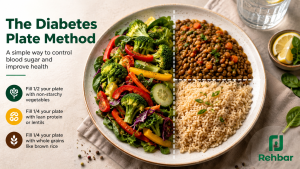
You don’t need to count every calorie. A practical approach: use a smaller plate, fill half of it with vegetables, one quarter with protein, and one quarter with carbohydrates. Eat slowly, put the phone down, and stop when you’re 80% full.
For people who are overweight, even a modest reduction, around 5 to 10% of body weight, has been shown to produce meaningful improvements in blood sugar levels and insulin sensitivity.
7. Try the Plate Method for Meal Planning
Carbohydrate counting sounds complicated, and for many people it is. The plate method is easier to follow without any apps or calculations.
The American Diabetes Association endorses the plate method as one of two practical approaches to meal planning alongside carb counting. The idea: at every meal, half your plate is non-starchy vegetables (spinach, broccoli, salad, karela), one quarter is a quality protein (chicken, fish, eggs, lentils), and one quarter is a starchy carbohydrate (brown rice, whole-grain chapati, oats).
This naturally limits refined carbs without requiring you to weigh food or track anything. For the South Asian diet, it means keeping biryani and white rice as occasional meals rather than daily staples, and adding more dal, sabzi, and salad to every plate.
Read More: Government Hospitals in Lahore [Complete List]
8. Consider These Herbs and Supplements (With Caution)
Several natural supplements have meaningful evidence behind them. None replaces medication, and all should be discussed with a doctor before starting, especially if you’re already on blood sugar medication, because they can amplify the effect and cause hypoglycemia.
Fenugreek (Methi Dana)
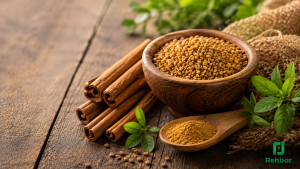
A review of clinical trials and interventional studies from 2019 to 2024 found that fenugreek supplementation significantly reduces fasting blood glucose, HbA1c levels and improves serum insulin levels, thereby delaying the progression of prediabetes to type 2 diabetes. These effects appear to be primarily due to fenugreek’s high fiber content, which slows carbohydrate absorption, alongside bioactive compounds that stimulate insulin secretion and improve insulin sensitivity.
In South Asian cooking, methi dana is already a common ingredient. Soaking a teaspoon of fenugreek seeds overnight and drinking the water in the morning is a widely practiced home remedy with some scientific backing.
Cinnamon (Dalchini)
The authors of a 2024 analysis of 24 clinical trials found that cinnamon appears to lower fasting glucose and may have a role as an add-on treatment for people taking medication for diabetes. Scientists think it may work by making cells more sensitive to insulin.
Ceylon cinnamon (true cinnamon) is the variety used in most studies. Cassia cinnamon, which is more widely available, contains a compound called coumarin that can be harmful in large doses. Stick to small culinary amounts.
Berberine
Research has shown that 500mg of berberine taken two to three times daily was able to control blood sugar and lipid metabolism as effectively as metformin in some studies. A systematic review and meta-analysis confirmed berberine significantly reduces fasting plasma glucose and HbA1c levels in people with type 2 diabetes.
Berberine isn’t as widely available in Pakistan as it is in Western markets, but it can be sourced from pharmacies or health stores. Its effectiveness is genuinely impressive by supplement standards, but again — don’t take it without medical supervision if you’re already on diabetes medication.
Bitter Gourd (Karela)
Bitter gourd, also known as bitter melon, has attracted considerable interest for its ability to regulate blood sugar. It’s a staple vegetable in Pakistani kitchens and one of the most accessible natural options. Juicing it or cooking it regularly has been a traditional diabetes remedy across South Asia for generations, and modern research, though limited, suggests there’s something to it.
9. Quit Tobacco
Nicotine increases blood sugar levels and makes them harder to manage. Smoking is particularly damaging for people with diabetes because it also accelerates cardiovascular disease and damages blood vessels — complications that diabetes already increases the risk of.
This is one area where the advice is unambiguous: stopping tobacco use is one of the most impactful steps a person with diabetes can take. Your doctor can help you find the right method to quit.
10. Monitor and Track Your Blood Sugar
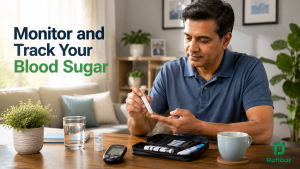
None of the strategies above work as well without feedback. If you don’t know what your blood sugar is doing in response to a meal, exercise session, or night of bad sleep, you’re flying blind.
Monitoring blood sugar regularly helps identify fluctuations that require medical attention. This data can also provide insights into the effectiveness of diet, exercise, and stress management strategies.
A basic home glucometer costs very little and gives you real-time data. Continuous glucose monitors (CGMs) are becoming more accessible globally and are now being considered for adults with type 2 diabetes in the updated American Diabetes Association Standards of Care 2025. They’re not yet widely available in Pakistan at an affordable price, but the basic finger-prick glucometer is sufficient for most people to start making meaningful adjustments.
Check your fasting blood sugar in the morning and occasionally two hours after meals. Keep a simple log. Bring it to your doctor appointments. This habit alone will tell you more about how your body responds to food and lifestyle than any generic advice can.
What Actually Moves the Needle: A Quick Summary
| Strategy | Primary Mechanism | Difficulty | Evidence |
| High-fiber diet | Slows glucose absorption | Moderate | Strong |
| Regular exercise | Improves insulin sensitivity | Moderate | Very strong |
| Stress management | Reduces cortisol-driven glucose spikes | Variable | Strong |
| Quality sleep (7+ hrs) | Reduces insulin resistance | Low effort | Strong |
| Adequate hydration | Supports kidney glucose clearance | Low | Moderate |
| Weight management | Reduces insulin resistance | High | Very strong |
| Fenugreek (methi) | Slows carb absorption, boosts insulin | Low | Moderate-Strong |
| Cinnamon | Improves insulin sensitivity | Low | Moderate |
| Berberine | Reduces glucose production | Low | Strong |
| Quitting tobacco | Reduces blood sugar + complications | High | Strong |
FAQ
Can type 2 diabetes be reversed naturally?
In some cases, yes, particularly in people who are newly diagnosed and significantly overweight. Weight loss through diet and exercise has led to documented remission in clinical trials, most notably the UK Diabetes Remission Clinical Trial (DiRECT). “Remission” means blood sugar returning to normal without medication. It’s not a cure, and it requires sustained lifestyle change, but it’s a real possibility for a meaningful number of people.
How long does it take for lifestyle changes to lower blood sugar?
Some changes, like a single bout of exercise or reducing carbohydrates at one meal, can lower blood sugar within hours. Meaningful changes in HbA1c (a 3-month average of blood sugar) typically take 3 to 6 months of consistent effort.
Is karela (bitter gourd) juice effective for diabetes in Pakistan?
It shows promise in research, and it has a long history of traditional use across South Asia. The evidence isn’t strong enough to recommend it as a treatment on its own, but adding karela to your diet as a regular vegetable is low-risk and potentially helpful.
Should I stop my diabetes medication if I start living healthier?
Never stop or reduce medication without medical supervision. If your lifestyle changes significantly improve your blood sugar, your doctor may decide to reduce your medication — but that decision is theirs to make based on your test results.
Does intermittent fasting help with blood sugar?
There’s growing evidence that time-restricted eating (e.g., eating within an 8-hour window) can improve insulin sensitivity and reduce fasting blood sugar. It’s not suitable for everyone, particularly those on insulin who risk hypoglycemia during fasting periods. Consult your doctor before trying it.
The bottom line is straightforward. Blood sugar responds to what you eat, how much you move, how well you sleep, and how stressed you are. These aren’t new discoveries — they’re well-established biological facts. What is newer is the quality of the evidence showing just how far these changes can take you. For the tens of millions of Pakistanis and hundreds of millions worldwide managing diabetes, the natural strategies above aren’t alternatives to medicine. They’re what make medicine work better.