

Filer vs Non-Filer Status for Overseas Pakistanis
Disclaimer: Tax rules and withholding rates in Pakistan change throughout the year and sometimes vary by source even within the same tax year. The figures below reflect publicly reported rates as of 2026. Confirm current numbers with the FBR IRIS portal or a tax consultant before you rely on them for a transaction.
If you live abroad and still own property, a bank account, or a car in Pakistan, whether your name sits on the Active Taxpayer List can cost you real money the next time you buy, sell, or move funds. This guide breaks down filer vs non-filer status for overseas Pakistanis: what the two categories mean, how much the gap actually costs, and how to fix your status from wherever you’re based.
What Filer and Non-Filer Actually Mean
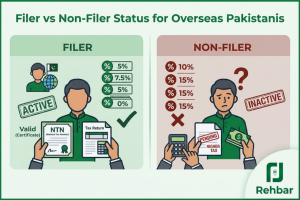
A filer is someone registered with the Federal Board of Revenue who has submitted an income tax return for the most recent tax year and appears on the Active Taxpayer List, commonly shortened to the ATL. A non-filer is anyone who hasn’t registered, hasn’t filed, or filed but somehow doesn’t show up on that list.
There’s also a middle category worth knowing about: the late filer. This is someone who did file a return, just after the September 30 deadline. Late filers pay a surcharge to restore active status and, in the meantime, sit closer to non-filer treatment than active filer treatment on several transaction types.
The tax year itself runs on its own calendar. Tax Year 2026 covers income earned between July 1, 2025 and June 30, 2026, and the IRIS portal typically opens for filing shortly after that window closes.
Read More: Best Ways to Send Money to Pakistan in 2026
Why This Matters More If You Live Abroad
Plenty of overseas Pakistanis assume tax status is a resident’s problem. It isn’t. If you own a bank account, property, or investments in Pakistan, your filer status still determines what you pay on nearly every transaction tied to those assets, even if you haven’t set foot in the country in years.
The FBR has also gotten better at catching people who should be filing but aren’t. According to reporting from Baco Consultants, the agency has expanded its data matching between travel records, banking data, utility connections, and property ownership through 2025 and 2026, and overseas Pakistanis with outdated or inconsistent residency status on file are increasingly receiving automated notices as a result.
One thing worth clearing up early: remittances you send home to family are not taxable income. Only actual income earned inside Pakistan, such as rental income or bank profit, counts toward what you owe.
Read More: Roshan Digital Account 2026 Guide for Overseas Pakistanis
How to Become a Filer as an Overseas Pakistani
- Register on IRIS. Go to iris.fbr.gov.pk and register using your CNIC or NICOP number. You don’t need to be in Pakistan to do this.
- Get your NTN issued. Once registration is processed, FBR assigns you a National Tax Number tied to your CNIC or NICOP.
- Confirm your residency status. Overseas Pakistanis who spend more than 182 days outside Pakistan in a tax year are generally treated as nonresidents, which changes what income is even taxable locally.
- Gather your documents. You’ll typically need bank statements from Pakistani accounts, property records if you own any, and rental income details if applicable.
- File your return and wealth statement. Every filer, resident or nonresident, has to submit a wealth statement alongside the return, reconciling assets, liabilities, and income for the year.
- Submit before September 30. This is the standard deadline each year unless FBR announces an extension.
- Authorize a representative if needed. You can file directly through IRIS yourself, or authorize someone in Pakistan to file on your behalf through a power of attorney or a documented online authorization.
Filing late doesn’t lock you out permanently. FBR generally allows returns to be filed or revised within five years, so if you’ve missed prior years, filing them now clears your ATL status going forward.
Read More: How Overseas Pakistanis Can Buy Property Remotely
What Filer Status Costs You on Property Transactions
Property is where the filer and non-filer gap shows up hardest, and it’s also where the numbers get confusing because rates have shifted more than once through 2026 and different sources report slightly different figures depending on when they were published and which property value bracket they’re describing.
Two sections of the tax code do the work here. Section 236K is the advance tax a buyer pays at the time of transfer. Section 236C is the advance tax a seller pays. Both are collected by whoever handles the transfer, whether that’s a registrar, a development authority, or a housing society office.
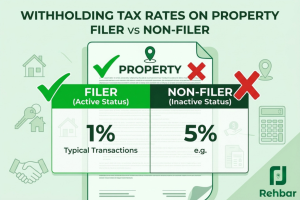
Reported rates for the 2026 to 2027 tax year look roughly like this, though you should treat these as illustrative rather than final:
| Transaction | Filer rate | Non-filer rate |
| Buyer, Section 236K | Roughly 1.25% to 1.5% | Roughly 10.5% to 18.5% |
| Seller, Section 236C | Roughly 2.75% | Roughly 10% to 11.5% |
Some sources report even wider gaps on higher value properties, with non-filer buyers paying more than seven times what a filer pays on the same transaction. Both taxes are described as advance and adjustable, meaning a filer can claim the amount back against their annual tax liability when they submit a return, rather than treating it as a straight loss. For a non-filer, much of it functions closer to a final cost.
Given how often these figures move, run your exact numbers through a current FBR withholding calculator or ask a tax consultant before you commit to a token payment, rather than relying on a percentage you saw in an article months ago, including this one.
Read More: Power of Attorney for Property: Overseas Pakistanis Guide
The Special Rule for Nonresident Property Buyers
Here’s a detail a lot of overseas Pakistanis don’t know about. Under FBR policy, nonresident Pakistanis, meaning NICOP or POC holders who qualify as nonresidents by spending more than 182 days abroad, can pay advance property tax at the active filer rate even if they aren’t on the ATL and haven’t filed a Pakistani return. The condition is that the property has to be purchased through an official banking channel built for nonresidents, most commonly a Roshan Digital Account.
Investments made through that channel are also treated as full and final tax payments for that specific transaction, which removes the need to file a separate annual return just for that investment. This is one of the clearer financial arguments for routing property purchases through an RDA instead of an informal transfer if you’re buying from abroad.
You can also apply for a formal nonresident exemption certificate from the Commissioner Inland Revenue through IRIS, which documents your status proactively rather than leaving it to be sorted out mid transaction.
Other Places the Filer Non-Filer Gap Shows Up
Property gets the most attention, but the same gap runs through several other transaction types:
- Vehicle registration and transfer, where non-filers can pay double or triple the filer rate depending on engine size
- Bank profit and dividend income, where withholding tax is higher for non-filers and often not adjustable against a future return
- Large cash withdrawals, where banks apply higher withholding for account holders not on the ATL
- Business and contract eligibility, where some counterparties check filer status before signing, since it signals a documented financial history
None of these are one time costs. They repeat every year you stay off the ATL, which is part of why the gap adds up faster than people expect.
Read More: Dual Nationality Pakistan Allows: Full Country List
What You Need to File From Abroad
Filing from outside Pakistan doesn’t require different paperwork so much as it requires having the right documents ready before you start. Keep these on hand:
- CNIC or NICOP number
- Bank statements from any Pakistani accounts
- Property ownership documents, if you own real estate in Pakistan
- Rental income records, if applicable
- Details of any Pakistani source income, such as bank profit or business earnings
A wealth statement is not optional. Skipping it or filing it with numbers that don’t line up with your income is one of the more common triggers for an FBR notice down the line.
Read: Can Overseas Pakistanis Vote in Pakistan Elections
Common Mistakes Overseas Pakistanis Make
A few patterns show up often enough to call out directly:
- Assuming remittances count as taxable income. They don’t. Only income actually earned in Pakistan is taxable.
- Ignoring the wealth statement. Filing the income section but skipping the wealth statement creates reconciliation problems that surface in later years.
- Missing the September 30 deadline and only realizing the cost once a property or vehicle transaction hits the non-filer rate.
- Assuming old rates still apply. Withholding percentages on property have shifted more than once in recent years, so a figure from an old article can be wrong by a wide margin.
- Not verifying ATL status before a transaction date, which can push someone who technically filed into non-filer treatment if their name hasn’t processed onto the list yet.
Read: PM Petrol Relief Scheme 2026: Who Qualifies, How to Register, and How Much You Save
Frequently Asked Questions
Do overseas Pakistanis have to file a Pakistani tax return every year?
If you have taxable Pakistan source income, own property, or hold accounts generating profit, yes. Filing a nil return is still required in some cases even when your local income is minimal.
Are remittances to family in Pakistan taxed?
No. Regular remittances sent home are not treated as taxable income under Pakistani tax law.
Can I file my Pakistani tax return without visiting Pakistan?
Yes. The entire process runs through the FBR IRIS portal, and you can also authorize a representative in Pakistan to file for you.
What happens if I’ve never filed and I’m years behind?
FBR generally allows returns to be filed or revised within five years. Filing your back years now typically resolves your ATL status and stops the non-filer penalty from continuing to apply.
Does buying property through a Roshan Digital Account really get me filer rates?
Based on current FBR policy, nonresident Pakistanis buying through an RDA or similar documented nonresident channel can access active filer tax rates on that specific transaction, even without being on the ATL, as long as the required conditions are met.
If you’ve been putting off registering with FBR because it feels like a hassle from abroad, the honest answer is that the paperwork takes less time than most people expect, and the cost of staying a non-filer compounds every year you wait. Start with IRIS registration, get your NTN issued, and file even a simple return before the next September 30 deadline rolls around.