PM Petrol Relief Scheme 2026: Who Qualifies, How to Register
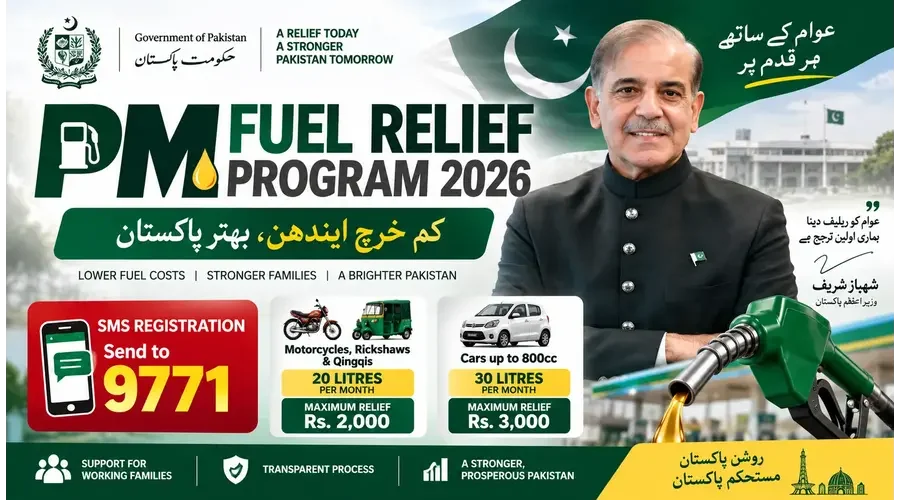
Petrol in Pakistan crossed Rs375 a litre in September 2026, and diesel is above Rs403, after the Middle East conflict pushed global oil prices up again. To soften the hit for the people who feel it most, Prime Minister Shehbaz Sharif announced a new relief scheme that knocks Rs100 off every litre of petrol for motorcycles, rickshaws, Qingqis, and small cars up to 800cc. Unlike some of the government’s earlier petrol subsidies, this one doesn’t route money through bank accounts or income surveys. It runs entirely on SMS, and you can register from your phone in under a minute.
Here’s what actually qualifies, how the registration works step by step, and a few things worth knowing before you head to the pump.
Who Can Get This Discount
The scheme is built around vehicle type and engine size rather than income level, which makes it simpler to check than most government relief programs. You’re covered if you own or regularly use:
- A motorcycle
- A rickshaw or Qingqi (Chingchi)
- Any car with an engine up to 800cc, such as the Suzuki Mehran, Alto, Bolan, Every, or similar 660cc Japanese hatchbacks
There’s an important distinction in how ownership is treated. For motorcycles and three-wheelers, the government widened eligibility to cover users, not just the person whose name is on the registration book. That’s a deliberate move to account for how common open-letter transfers and informal ownership are in Pakistan; plenty of bikes on the road are being ridden by someone other than the original registered buyer. For cars, though, the rule is stricter: only the registered owner can sign up.
How Much You Actually Save
The discount is a flat Rs 100 per litre, but the monthly quota differs by vehicle type:
| Vehicle type | Monthly quota | Maximum monthly saving |
| Motorcycles, rickshaws, Qingqis | 20 litres | Rs2,000 |
| Cars up to 800cc | 30 litres | Rs3,000 |
You don’t get this all at once. Petrol is released in smaller batches through tokens (more on that below), so think of the 20 or 30 litres as a running monthly allowance rather than a single lump sum you collect in one visit.
Registering for the Scheme: Step by Step
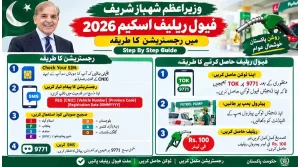
Registration happens entirely through SMS to the short code 9771, and it’s meant to be a one-time step.
- Send your details in the required format. Text the following to 9771: CNIC number, vehicle plate number, province code, and registration date in DDMMYYYY format.
- Use the right province code. This should match where your vehicle is registered, not where you personally live. That matters because the same plate number can exist under different provincial excise departments, so the province code is what tells the system which record to check.
- Wait for confirmation. Once the details clear verification, you’ll get an SMS confirming your registration was successful.
Province codes for the SMS format are:
- I — Islamabad
- P — Punjab
- S — Sindh
- K — Khyber Pakhtunkhwa
- B — Balochistan
- A — Azad Jammu and Kashmir
- G — Gilgit-Baltistan
One detail that trips people up: the CNIC you text in has to be registered against the SIM you’re sending the message from. The system cross-checks this with telecom data, so registering from a SIM that isn’t in your name, or a friend’s number, will likely fail. The registration date also matters more than people expect; it helps the government confirm you actually had documentation for the vehicle, partly as a check against stolen or newly-flipped vehicles being registered for the subsidy.
Getting Your Subsidized Petrol
Registration only gets your name into the system. To actually use the discount, you need a token each time you fill up.
- Text TOK to 9771 before heading to the pump.
- You’ll receive a token number by SMS. Motorcycle and rickshaw tokens cover 5 litres at a time (a Rs500 discount), while car tokens cover 10 litres at a time (a Rs1,000 discount).
- Show the token message to the attendant at the pump. The Rs100/litre discount is applied automatically, up to whatever’s left of your monthly quota.
It’s worth double-checking the pump slip before you pay. Confirm both the quantity dispensed and that the discount was actually deducted, since mistakes (or shortcuts) at busy stations aren’t unheard of.
When and Where It’s Rolling Out
The scheme went live in Islamabad at midnight between September 14 and 15, 2026, initially through roughly 150 petrol pumps in the capital. It then extends nationwide, including Azad Jammu and Kashmir and Gilgit-Baltistan, from midnight between September 16 and 17. Registration itself opened a few days earlier, on Sunday, September 13.
Behind the scenes, the government says it has set up a dedicated team to handle problems at petrol pumps and is settling payments to pump owners daily through the State Bank, rather than letting the subsidy pile up as unpaid dues (a problem that has plagued similar programs in the past).
How This Differs From Earlier Fuel Subsidies
If you feel like you’ve registered for a petrol subsidy before, you’re probably not imagining it. Pakistan has rolled out several fuel relief programs in recent years, and they’ve worked quite differently from each other:
- The 2022 “Sasta Petrol, Sasta Diesel” scheme targeted low-income households (under Rs40,000 monthly income) and paid out Rs2,000 through BISP-linked bank branches, verified by texting a CNIC to 786.
- An earlier 2026 federal scheme, active roughly from March to June, used a one-time password system tied to the State Bank and required beneficiaries to be registered with BISP.
- Some provinces ran (or still run) their own parallel schemes, such as Punjab’s app-based bike subsidy and Sindh’s excise department web portal.
The current scheme is different from all of these. It isn’t income-tested, doesn’t touch BISP records, and doesn’t need a bank visit. Eligibility is based purely on what you drive, and the entire process, from registration to redemption, happens through SMS. If you come across instructions mentioning 786, a BISP office, or a bank pickup, that’s an older or unrelated program, not this one.
Why This Scheme Exists Right Now
The immediate trigger is the widening US-Iran conflict and attacks on Saudi energy facilities, which have pushed global oil prices sharply higher and added fresh uncertainty around shipping through the Strait of Hormuz. Pakistan imports around 90% of its petroleum needs, so global spikes translate quickly into higher pump prices and pressure on foreign reserves.
Rather than cut the petroleum levy (currently Rs78 per litre, plus a Rs5 carbon surcharge) across the board, the government opted for a targeted subsidy aimed at motorcyclists, rickshaw drivers, and small-car owners, groups officials describe as disproportionately affected by petrol price inflation. Officials have also said that if global prices ease and fiscal room opens up, any relief from lower levies would be passed on to consumers generally, separate from this targeted scheme.
Watch Out for Scams
Because the scheme runs through simple SMS codes, it’s an easy target for fraud. The government has been explicit on this point: it will never call, WhatsApp, or text you asking for money, an OTP, a verification code, or extra personal details to “complete” your registration. If you get a message like that, it isn’t from the government, and you shouldn’t respond or send anything.
The Bottom Line
If you ride a motorcycle, rickshaw, or Qingqi, or own a car with an engine up to 800cc, this scheme can knock a real chunk off your monthly petrol bill with very little effort. Register once with your CNIC and vehicle details through 9771, request a token before each fill-up, and keep an eye on your quota so you know when you’ve used up your monthly allowance. The government hasn’t announced a fixed end date for the scheme, so it’s worth checking official updates periodically for any changes to the process or the discount amount.
FAQ
Do I need to be the registered owner of my motorcycle to apply?
No. For motorcycles, rickshaws, and Qingqis, the government allows users to register even if the bike is technically registered in someone else’s name, to reflect how common informal transfers are. For cars, only the registered owner can apply.
What happens if I enter the wrong province code?
Your registration is likely to fail verification, since the code needs to match the province where the vehicle itself is registered, not where you live. Double-check your vehicle’s registration book before sending the SMS.
Can I register using someone else’s SIM card?
It’s not recommended. The system checks that the CNIC you submit matches the CNIC the SIM is registered under, so using a SIM that isn’t in your name is likely to cause your application to be rejected.
How often do I need to request a token?
Every time before you go to fill up. Tokens aren’t unlimited: motorcycle and rickshaw tokens cover 5 litres, and car tokens cover 10 litres, up to your remaining monthly quota.
Do I need to register again every month?
No. Registration through 9771 is described as a one-time step. After that, you simply request a new token each time you need subsidized fuel.
What if a petrol pump doesn’t apply my discount correctly?
Check your receipt for both the quantity and the discount before paying. If something looks off, you can flag it, since the government has said it’s monitoring complaints from pumps directly.
Is this the same as the Sasta Petrol scheme from a few years ago?
No. That scheme was income-based and paid out through BISP and partner banks. This one is based on vehicle type, runs through SMS, and doesn’t involve any income screening or bank visit.