
Dual Nationality Pakistan Allows
Disclaimer: Citizenship law and the list of approved countries can change through government notification. This article reflects the list published by Pakistan’s Directorate General of Immigration and Passports as of January 2026. Confirm current status at dgip.gov.pk before making any citizenship decision.
Pakistan does not let its citizens hold a second passport with just any country. Since a 1972 amendment to the Pakistan Citizenship Act, dual nationality has been permitted, but only with countries the federal government has formally agreed to it with. Acquire citizenship anywhere outside that list, and you lose your Pakistani nationality automatically under the law. Here’s the full official list, how the arrangement actually works, and what your options look like if the country you’re in isn’t on it.
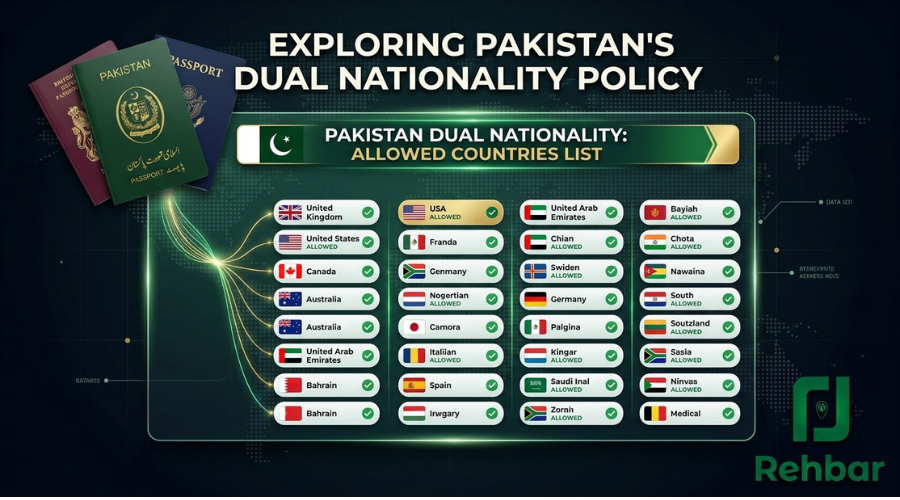
The Full List of 22 Countries
According to the Directorate General of Immigration and Passports, the government body responsible for maintaining this list, Pakistan currently has dual nationality arrangements with these 22 countries:
- United Kingdom
- United States of America
- Canada
- Australia
- New Zealand
- France
- Italy
- Belgium
- Iceland
- Finland
- Switzerland
- Netherlands
- Sweden
- Ireland
- Denmark
- Germany
- Norway
- Luxembourg
- Egypt
- Jordan
- Syria
- Bahrain
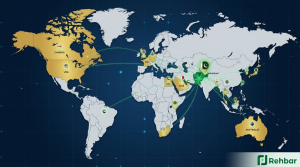
This list runs almost entirely through Western Europe, North America, and Oceania, with Egypt, Jordan, Syria, and Bahrain as the notable exceptions from the Middle East and North Africa. Given how many overseas Pakistanis live and work in the Gulf, it’s worth noting directly that major destinations like the UAE, Saudi Arabia, Qatar, Kuwait, and Oman are not on this list, which changes the calculation for citizens working in those countries specifically.
The Legal Basis for This List
Dual nationality in Pakistan runs through Section 14 of the Pakistan Citizenship Act, 1951. Section 14(1) actually prohibits dual nationality as the default rule. Section 14(3) carves out the exception, allowing Pakistani citizens to acquire citizenship of the United Kingdom and Colonies, plus any other country the federal government specifically names through an official Gazette notification.
That second part matters. The list isn’t fixed in the original law itself. It grows or changes through government notification, which is how Pakistan added countries over time and why it’s worth checking the current list rather than relying on an older one.
What Happens If You Naturalize Somewhere Not on the List
If you acquire citizenship of a country not on this list, Pakistani law treats that as an automatic loss of your Pakistani nationality. There’s no notification process where you get to keep both. The moment you complete naturalization elsewhere, Pakistani citizenship falls away by operation of law.
This is the exact situation the Pakistan Origin Card was built for. If you’ve lost Pakistani citizenship this way but still want a documented connection to Pakistan, including property rights, banking access, and visa free entry, a POC is the route available to you instead of a NICOP.
What Rights Dual Nationals Keep, and What They Don’t
Holding dual nationality under one of these 22 arrangements preserves most of what a single nationality Pakistani citizen has, with two specific restrictions worth knowing:
- You cannot sit in Parliament. Article 63(1)(c) of the Constitution bars dual nationals from holding a seat in the National Assembly or Senate unless they renounce the foreign nationality first. This has come up repeatedly in Pakistani politics, including disputes over whether specific lawmakers held undisclosed foreign citizenship.
- You generally cannot join the armed forces while holding a second nationality, for similar reasons tied to national security and undivided loyalty.
Outside those two restrictions, dual nationals keep full civil rights, property rights, and business rights, and can formalize their status through a Dual Nationality Certificate issued by the Directorate General of Immigration and Passports.
Practical Notes for Dual Nationals
- Always enter Pakistan on your Pakistani passport or NICOP, not your foreign one. Entering on a foreign passport as a dual national can trigger questions about your citizenship status at immigration that a Pakistani travel document avoids entirely.
- Use whichever passport gives you better visa free access when traveling elsewhere. A Pakistani British dual national, for example, generally gets far broader visa free travel using the UK passport than the Pakistani one alone would allow.
- Keep your NICOP current. This remains the key identity document tying your dual nationality status to banking, property, and inheritance matters in Pakistan.
- Children born to dual nationals can also hold dual nationality, provided the second country is on the approved list, and can be registered accordingly through NADRA.
What About Countries Currently Left Off the List
A few countries come up often enough in questions from readers that they’re worth addressing directly. Turkey, for instance, is not currently on the approved list, though reporting from mid-2026 indicates Pakistan’s Ministry of Foreign Affairs and Ministry of Interior have been reviewing a draft proposal for a formal arrangement. Nothing has been finalized as of the most recent reporting, so Pakistani citizens who’ve naturalized in Turkey should not assume dual nationality applies until an official notification confirms it.
This is a useful general pattern to keep in mind: the list changes periodically, and news of a country being “close” to an agreement isn’t the same as an actual notification taking effect. Check dgip.gov.pk directly before making any decision that depends on your citizenship status.
Frequently Asked Questions
Does Pakistan allow dual nationality with any Gulf country? Yes, but only Bahrain. The UAE, Saudi Arabia, Qatar, Kuwait, and Oman are not on the current list, despite hosting some of the largest Pakistani diaspora communities in the world.
What happens if I already hold citizenship of a country not on this list? Under Pakistani law, acquiring that citizenship would have triggered automatic loss of your Pakistani nationality at the time you naturalized. A Pakistan Origin Card is generally the relevant document going forward rather than a NICOP.
Can I add a country to my Dual Nationality Certificate later if it gets added to the list? If a country you hold citizenship in gets added to the approved list after the fact, you’d need to check current procedure with the Directorate General of Immigration and Passports, since this depends on how the notification is worded and applied.
Do dual nationals pay different taxes in Pakistan? Tax obligations depend on residency status and income source rather than dual nationality itself. A dual national who qualifies as a nonresident under Pakistani tax rules is generally treated the same as any other nonresident Pakistani for tax purposes.
Can a dual national vote in Pakistani elections? Dual nationals retain the same voting rights tied to Pakistani citizenship as any other citizen, subject to the broader unresolved questions around overseas voting mechanisms covered elsewhere.
If you’re planning to naturalize somewhere and want to keep your Pakistani citizenship intact, checking whether that specific country appears on this list before you complete the process is worth doing early, since the loss of nationality happens automatically and isn’t something you can undo after the fact through paperwork alone.