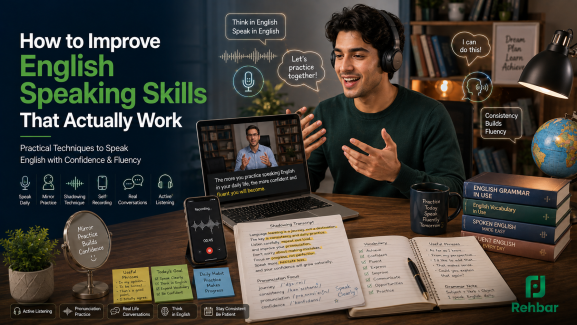

IELTS Speaking Test Preparation Tips That Actually Work
Eleven to fourteen minutes. That’s the entire IELTS Speaking test, and somehow it’s the section that makes even confident English speakers nervous. Part of that is the live, one on one format. Part of it is not really understanding what the examiner is scoring while you talk. Once you understand both, the test stops feeling like a mystery and starts feeling like something you can actually prepare for.
This guide walks through the current test format, what each of the four scoring criteria actually means in practice, and the preparation habits that move the needle, based on how IELTS itself describes its scoring and how recent test takers and examiners describe the 2026 version of the exam.
How the IELTS Speaking Test Is Structured
The test runs as a live conversation with a certified examiner, and it’s broken into three parts that build in difficulty.
Part 1 is the warm up. The examiner asks general questions about familiar topics, your home, your studies or work, your interests, and similar everyday subjects. This part typically runs four to five minutes and isn’t meant to challenge you, it’s meant to get you talking naturally before the harder parts begin.
Part 2 is the long turn. You’re handed a task card with a topic, given exactly one minute to prepare notes, and then asked to speak for one to two minutes without interruption. This is the part most candidates dread because it’s the longest uninterrupted stretch of speaking in the entire test, and there’s no back and forth to lean on if you run out of things to say.
Part 3 is a two way discussion connected to the Part 2 topic, but it moves into more abstract, analytical territory. According to SimplyIELTS’s 2026 breakdown, the examiner pushes your linguistic limits here, asking complex, multi layered questions that often require advanced grammar like conditionals and passive voice to express more abstract ideas properly.
The whole test takes 11 to 14 minutes according to multiple current sources, including a 2026 breakdown from Test English Level, and the format is identical whether you’re taking IELTS Academic or IELTS General Training. Your speaking performance is scored on the exact same scale regardless of which version of the broader test you’re sitting.
The Video Call Speaking Format
One genuine change worth knowing about going into 2026 is the rollout of Video Call Speaking, often shortened to VCS. According to IDP IELTS, the Speaking test is now offered at many centers in one of two formats, either the traditional Face to Face format or Video Call Speaking, where you and the examiner are in the same physical test venue but connect through a screen rather than sitting in the same room.
IDP is explicit that both formats are identical in content, timing, scoring, and structure. The only difference is the medium. You generally can’t choose which format you get, since it depends on which test center you book and what that center currently offers.
A practical detail worth preparing for: in VCS sessions, the Part 2 cue card appears on a monitor rather than being handed to you on paper, according to a 2026 IELTS updates summary from Innovative Centre. If you’ve only ever practiced with a physical cue card, it’s worth doing a few practice rounds reading a prompt off a screen instead, just so it doesn’t throw off your one minute prep time on the actual test day.
IELTS’s own research division has been studying this format closely. A research report on the development of the Video Call Speaking test noted that examiners perceived test takers as comfortable and not intimidated by the video call mode, and that a small majority of test takers agreed VCS allowed them to show their full English ability. That’s reassuring if you’re nervous about getting assigned the video format, since the format itself doesn’t appear to be a meaningful disadvantage based on the available research.
What the Examiner Is Actually Scoring
Your Speaking score comes from four criteria, each weighted equally at 25% of your total, according to SimplyIELTS’s 2026 format breakdown. Understanding what each one actually measures, rather than vaguely knowing the names, changes how you practice.
Fluency and Coherence
This isn’t about speaking fast. It’s about speaking smoothly, without excessive hesitation, and connecting your ideas in a way that’s easy to follow. A test taker who speaks at a moderate pace with clear logical connections between ideas scores better than someone who rushes through with frequent self corrections and false starts.
Lexical Resource
A common misconception is that throwing in impressive sounding vocabulary boosts this score. It often does the opposite. A 2026 update on IELTS changes warned candidates that examiners are now specifically instructed to interrupt and probe further if they sense a candidate is using unnatural, dictionary style words out of context, citing words like “plethora” or “myriad” dropped into a sentence where they don’t fit naturally. Lexical resource is scored on appropriate, varied vocabulary used accurately in context, not on how impressive your word choices sound in isolation.
Grammatical Range and Accuracy
This rewards variety as much as correctness. A candidate who only ever uses simple present tense sentences, even with zero grammar mistakes, won’t score as well as one who naturally mixes in conditionals, passive constructions, and varied tenses, even with the occasional minor slip. Part 3’s more abstract questions are specifically designed to draw out this kind of grammatical range.
Pronunciation
This measures clarity and natural rhythm rather than how closely you sound like a native British or American speaker. A 2026 IELTS update noted the listening section now includes a significant increase in non native but fluent accents, which reflects a broader shift in how IELTS approaches English as a genuinely global language rather than one tied to a single accent standard. The same philosophy extends to how Speaking pronunciation gets judged. A clear, consistently understandable Pakistani, Indian, or any other accent of English isn’t penalized for not sounding British or American.
Preparation Strategies That Actually Help
A lot of generic advice floating around tells you to “practice speaking every day,” which is true but not specific enough to be useful. Here’s what genuinely moves the needle based on how the test is structured and scored.
Record Yourself and Listen Back
This is uncomfortable the first few times, but it’s one of the more consistently recommended strategies across current IELTS guides. Test English Level’s 2026 breakdown specifically recommended recording your answers and playing them back to check for unnatural pauses or repeated phrases, since most people genuinely can’t hear their own filler words and hesitation patterns in real time the way they can when listening back afterward.
Never Memorize Full Answers
This deserves more emphasis than most learners give it. Examiners are trained to spot memorized, scripted answers, and the consequence isn’t just a missed opportunity, it’s an active penalty. Test English Level’s guide put it plainly: examiners spot a script instantly, and using one is treated like lip syncing instead of singing in your own voice. A 2026 update on IELTS changes confirmed this is now an explicit examiner instruction, where a suspected memorized response triggers an interruption and a pivot to unexpected follow up questions designed to test genuine spontaneous communication instead.
The better approach is practicing with sample questions to build familiarity with common topics and useful structures, without locking in word for word responses you plan to recite. Build flexible language you can adapt to whatever specific version of a question actually gets asked.
Always Extend Your Answers With a Reason or Example
One word or one sentence answers are one of the most common ways candidates lose points, particularly in Part 1. Test English Level’s guide flagged this directly, advising candidates to avoid one word answers and always add a reason or example. If asked whether you enjoy your job, “yes” tells the examiner almost nothing about your fluency, vocabulary, or grammar. “Yes, mostly because I get to work with a small team and we solve problems together most days” gives the examiner four or five times more language to actually score.
Use the One Minute Prep Time in Part 2 Strategically
You get exactly one minute to prepare notes before your Part 2 long turn. Don’t try to write full sentences in that minute, you won’t finish and you’ll end up reading rather than speaking naturally. Jot down a handful of keywords covering each prompt on the cue card, enough to jog your memory through the full two minutes without needing to write out what you’re actually going to say.
Practice Speaking Aloud, Not Just Thinking Through Answers
Test English Level’s 2026 guide specifically distinguished between practicing aloud and just rehearsing answers in your head, recommending you practice speaking aloud every day rather than silently working through what you’d say. Speaking and thinking use genuinely different cognitive processes, and a fluent internal monologue doesn’t automatically translate into fluent spoken output under the pressure of a real test.
Build Comfort With Abstract Part 3 Questions Specifically
Part 3 trips up more candidates than any other section because it asks you to discuss ideas rather than facts about your own life. Practicing questions that ask for your opinion on broader social or abstract topics, not just questions about your personal experience, builds the specific muscle Part 3 actually tests. If Part 2 asked you to describe a memorable trip, expect Part 3 to push toward something like why people value travel, or how travel has changed over the past few decades, questions that require genuine analytical language rather than personal narrative.
A Realistic Weekly Practice Plan
Spend roughly fifteen minutes most days answering a handful of Part 1 style questions aloud, focusing on extending each answer with a reason or example rather than rushing to the next question. Two or three times a week, give yourself a genuine Part 2 simulation, one minute of note taking followed by two minutes of uninterrupted speaking on a random cue card topic, recorded so you can review it afterward. Once a week, push into Part 3 style discussion questions on a topic you’ve recently practiced, focusing specifically on using varied grammar structures like conditionals rather than defaulting to simple sentences.
Review your recordings honestly. Listen for filler words, repeated phrases, and moments where you reverted to overly simple grammar because you were searching for what to say next. Those patterns, once you notice them, are usually fixable with targeted practice rather than a complete overhaul of your English.
Frequently Asked Questions
How long is the IELTS Speaking test?
The test runs 11 to 14 minutes total across all three parts, regardless of whether you’re taking IELTS Academic or General Training.
What’s the difference between Face to Face and Video Call Speaking?
Content, timing, and scoring are identical according to IDP IELTS. The only difference is whether you sit in the same room as your examiner or connect through a screen at the same test venue. You generally can’t choose which format you get.
Will I lose points for having an accent?
No. Pronunciation is scored on clarity and natural rhythm, not on matching a specific native accent. A clear, consistently understandable accent of any kind is not penalized.
Is it a good idea to memorize sample answers before the test?
No. Examiners are trained to detect memorized or scripted responses and will interrupt with unexpected follow up questions to test genuine spontaneous communication. Practice with sample questions for familiarity, but build flexible language rather than fixed scripts.
What should I do if I don’t understand a question during the test?
You can politely ask the examiner to repeat or clarify a question. This doesn’t count against your score, and it’s far better than guessing at what was asked and giving an answer that misses the point entirely.
Getting comfortable with the format removes most of the anxiety around IELTS Speaking, and after that, it really does come down to consistent practice that targets the right things. Record yourself this week answering a handful of Part 1 and Part 3 questions, listen back honestly, and build your practice plan around whatever patterns you actually hear.