
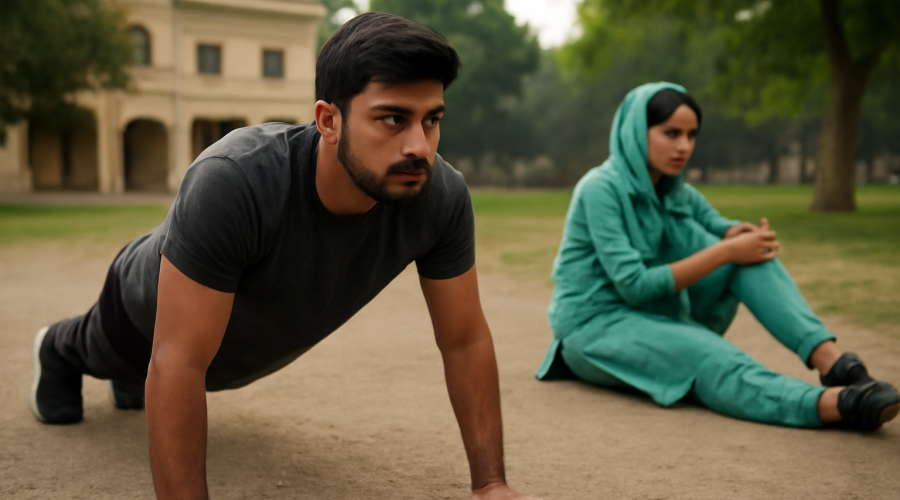
Best Exercises for Beginners in Pakistan: A Real Starting Guide
Disclaimer: This article is for general information only and isn’t medical advice. If you have a heart condition, joint problems, are pregnant, or haven’t exercised in years, check with a doctor before starting a new routine.
You’ve decided to start exercising. Then reality shows up: it’s 42 degrees outside in June, the nearest gym wants Rs 8,000 a month you don’t have, the park has no separate timing for women, and your last attempt at “getting fit” lasted exactly nine days. None of that means you can’t do this. It means the generic advice you’ve been reading, the kind written for someone with a backyard, a Peloton, and mild weather year round, was never built for life in Pakistan.
This guide is built for it. The best exercises for beginners in Pakistan are the ones that work with your climate, your budget, your street, and your schedule, not against them. That might mean a 30 minute walk before the heat sets in, a bodyweight routine on your rooftop, or a Rs 1,500 skipping rope instead of a gym membership. Here’s what actually works, based on what’s realistic here, not what’s trending on a fitness page based in California.
The stakes are real too. Research using the IPAQ activity questionnaire found that close to 70% of adults in some Pakistani communities are physically inactive, and Pakistan now has the highest prevalence of diabetes among adults aged 20 to 79 of any country tracked by the International Diabetes Federation. Inactivity isn’t a side detail in that picture, it’s one of the main drivers.
Why Most Beginners in Pakistan Quit Within Two Weeks
Before getting into specific exercises, it’s worth naming the actual obstacles, because most fitness advice skips this part entirely.
Heat. From May through September, much of Pakistan sees daytime temperatures well above 38°C, and Karachi’s humidity makes it feel worse than the number suggests. Trying to follow a workout plan written for a temperate climate, run at noon, do an outdoor HIIT session at 3pm, sets most people up to quit by week two, not from lack of discipline but from genuine heat exhaustion risk.
Cost. A gym membership in Lahore averages around Rs 7,943 a month according to cost-of-living tracker Expatistan, while Islamabad runs closer to Rs 3,685. For a lot of households, that’s not a small line item, it competes directly with grocery and utility budgets that have gotten tighter with inflation.
Access and safety, especially for women. Many public parks and jogging tracks don’t have separate or clearly safe timings for women, and reviews of popular spots like Zamzama Park in Karachi mention overcrowding and discomfort on weekends. This isn’t a minor inconvenience, it’s the single biggest reason a lot of women in Pakistan never start an outdoor routine at all.
No clear starting point. Most online workout content assumes you already know what a “moderate intensity” pace feels like, already own dumbbells, or already have 60 minutes free daily. Beginners don’t, and the gap between “expert content” and “someone who has never exercised before” is where most New Year’s resolutions die.
The exercises below are picked specifically because they sidestep these four problems.
How Much Exercise You Actually Need to Start
The World Health Organization’s guideline for adults aged 18 to 64 is 150 to 300 minutes of moderate intensity activity a week, or 75 to 150 minutes of vigorous activity, plus muscle strengthening activity on two or more days. That sounds like a lot until you break it down: 150 minutes a week is just over 20 minutes a day, roughly the length of one brisk walk.
Moderate intensity means you can still talk but not sing while doing it, brisk walking, cycling at a normal pace, light household work that gets your heart rate up. Vigorous intensity means talking in full sentences gets harder, running, fast cycling, an intense workout class.
If you’re starting from zero, don’t aim for 150 minutes in week one. WHO’s own guidance is explicit that some activity is better than none, and that beginners should build up gradually. Ten minutes a day for the first week, building to twenty, then thirty, is a far more durable approach than trying to hit the full target immediately and burning out.
Walking: The Most Underrated Exercise for Beginners
Walking doesn’t get much respect in fitness content because it isn’t dramatic, but for a true beginner in Pakistan, it’s close to the perfect starting exercise. It’s free, it needs no equipment beyond decent shoes, it’s low impact on joints, and it can be done almost anywhere.
The trick is timing it around the climate instead of ignoring it. Early morning, before 7am in summer, or after Maghrib once the sun has gone down, are the two windows that avoid peak heat in most cities. In winter, this becomes far more flexible, and midday walks are genuinely pleasant in much of the country from December through February.
If you live in or near Karachi, Lahore, or Islamabad, you likely have a free or low cost option nearby. Karachi’s Zamzama Park has a walking track running over 1,000 metres, Hilal Park has a track stretching close to 5 kilometres, and Jheel Park in PECHS has proper lighting for evening walks. Lahore’s Jilani Park, formerly Race Course Park, offers an easy 1.8 mile loop, and Jam-e-Shirin Park in Gulberg has a 2.5 km track with basic outdoor exercise equipment alongside it. If safety or crowding is a concern, especially for women, many of these parks have noticeably different crowds on weekday mornings compared to weekend evenings, so timing your visit matters as much as picking the park.
Don’t have a park nearby? A flat rooftop, a quiet street early in the morning, or even pacing a hallway while on a phone call all count. The goal for week one is simply 15 to 20 minutes most days, at a pace where you could hold a conversation but feel your heart rate pick up.
Home Workouts: No Gym, No Equipment, No Excuse
For a lot of beginners, especially women who don’t have easy or comfortable access to outdoor space, home workouts are the realistic entry point. The good news is that bodyweight training is genuinely effective for beginners, not a compromise version of “real” exercise.
A simple rotation that needs zero equipment and about 15 to 20 minutes:
- Bodyweight squats, 2 to 3 sets of 10 to 12, building leg and core strength without any load
- Wall or knee push ups, 2 to 3 sets of 8 to 10, easier on the wrists and shoulders than full push ups while still building upper body strength
- Standing marches or step ups on a stair, useful where outdoor space isn’t available, and genuinely raises heart rate
- Plank holds, starting at 15 to 20 seconds and building up, for core strength that supports everything else
None of this needs a video subscription or an app, though plenty of free YouTube channels demonstrate correct form if you want visual guidance for the first few sessions. What matters more than the specific moves is consistency: doing this three or four times a week for a month will do more for a true beginner than an intense routine done twice before quitting.
If you do want to add minimal equipment later, a skipping rope, typically under Rs 1,000 to 1,500 in most local sports shops, and a couple of resistance bands give you a lot more variety without anywhere near gym membership cost.
Cycling: A Genuine Option in the Right Areas
Cycling doesn’t get talked about much as a beginner exercise in Pakistan, but in planned residential areas with internal roads, like many DHA and Bahria Town sectors across different cities, it’s a realistic and low impact option. It’s easier on the knees than running, burns a comparable amount of energy at a steady pace, and doubles as transport if you’re cycling to a nearby market or a friend’s place rather than purely for exercise.
The catch is obvious: this only works where roads are safe enough to cycle on without dodging heavy traffic, which rules it out in a lot of dense urban areas. If you have access to a society’s internal roads, a university campus, or a large park with a cycling path, it’s worth considering as an alternative to walking, particularly if joint pain makes walking uncomfortable.
Strength Training Without a Gym Membership
A lot of beginners assume strength training requires a gym, but the muscle strengthening activity WHO recommends twice a week can be done with very modest equipment.
A pair of adjustable dumbbells, or even filled water bottles or a sack of atta as makeshift weights when starting out, covers a surprising amount of ground. Basic movements like bicep curls, overhead presses, and bent over rows, combined with the bodyweight moves mentioned earlier, hit all the major muscle groups WHO’s guidelines call for.
If budget allows for it later, a single set of resistance bands or a basic adjustable dumbbell set is a one time cost that’s usually lower than two or three months of gym fees, and it stays in your house indefinitely.
A Realistic Four-Week Starting Plan
This isn’t a rigid program, it’s a template you can adjust around your own schedule, weather, and energy levels.
By the end of week four, you’re close to WHO’s lower threshold of 150 minutes a week of moderate activity, built gradually instead of attempted all at once. Rest days aren’t optional extras, recovery is part of how the body actually adapts and gets stronger, especially for someone new to regular movement.
What to Eat Around a New Exercise Routine
Exercise and diet are connected, but starting a workout routine doesn’t mean overhauling your entire diet at the same time, that’s a common reason people give up on both at once. A few simple adjustments support a new routine without requiring a separate plan:
Drink water before and after exercising, especially in summer, since Pakistan’s heat increases fluid loss faster than people usually account for. A glass of water with a pinch of salt and sugar works as a reasonable home substitute for a sports drink after a sweaty session. Eating a small snack with some protein, like a boiled egg or a handful of chana, within an hour after exercising supports muscle recovery better than exercising on an empty stomach and then skipping food for hours.
Common Questions Beginners Ask
What’s the best time to exercise in Pakistan’s summer heat?
Early morning before 7am or evening after sunset are the safest windows during peak summer months. Midday exercise outdoors between roughly 11am and 5pm from May to September carries a real risk of heat exhaustion, especially for anyone who isn’t already acclimatized to exercising in heat.
Do I need a gym membership to get fit?
No. Walking, bodyweight exercises, and basic home equipment like a skipping rope cover both the cardio and strength components WHO recommends for adults. A gym adds variety and structure, which helps some people stay consistent, but it isn’t a requirement for genuine fitness progress as a beginner.
Is it safe for women to exercise outdoors in Pakistani cities?
This varies a lot by area and time of day. Many parks are noticeably calmer and safer on weekday mornings compared to weekend evenings. Where outdoor access feels uncomfortable or unsafe, home based bodyweight workouts are a completely valid and effective alternative, not a lesser option.
How long until I see results as a beginner?
Energy levels and sleep quality often improve within the first one to two weeks. Visible changes in strength and body composition typically take six to eight weeks of consistent activity, and this varies a lot from person to person based on starting point, diet, and consistency.
Can I exercise during Ramadan?
Yes, though timing matters more than usual. Light to moderate activity like walking is generally well tolerated either right before Iftar or a couple of hours after eating, once energy has returned. Intense exercise during fasting hours, especially in summer when fasts are longer, isn’t usually recommended for beginners.
Where to Start Today
Pick one thing from this guide and do it today, not next Monday. Put on shoes and walk for ten minutes around your block or to the nearest park. That’s a complete, legitimate first workout. The four week plan above gives you a structure to build on, but the only step that actually matters right now is the first one, taken before the heat, the gym fees, or last year’s failed attempt talk you out of it again.